B2B Email Lists
Targeted Business Email Data to Support Lead Generation, Sales Prospecting and Marketing Campaigns
Access high-quality B2B email lists built using detailed business data and flexible targeting criteria. DataHQ helps organisations identify and connect with relevant companies across the UK, enabling more focused marketing campaigns and effective lead generation.

Explore the Vista Database
Comprehensive UK business data for targeted marketing campaigns
Discover Dynamo
Get more commercial oomph from your marketing campaigns
Reaching the right audience is one of the most important factors in the success of any B2B marketing campaign. Whether your organisation is looking to generate new leads, promote a service or expand into new markets, connecting with the right businesses and decision-makers can significantly improve the results of your marketing activity.
B2B email lists provide organisations with a structured way to identify and communicate with relevant companies. By targeting specific industries, company types or job roles, businesses can build highly focused campaigns that reach the organisations most likely to be interested in their products or services.
At Data HQ, we provide access to extensive business intelligence and marketing data designed to support targeted outreach and lead generation. Our datasets allow marketing teams and sales professionals to build prospect lists based on detailed criteria such as industry sector, company size, geographic location and job role.
With the ability to segment prospects and focus campaigns on relevant audiences, targeted email lists remain a valuable tool for B2B marketing and business development.
What Are B2B Email Lists
A B2B email list is a structured database of professional contacts working within businesses. These lists typically include both company information and individual contact details, allowing organisations to communicate with specific decision-makers or departments within target companies.
Unlike consumer marketing lists, B2B email data focuses on professional contacts within organisations. This enables businesses to reach individuals responsible for purchasing decisions, strategic planning or operational management.
Typical B2B email lists include:
- Company Name
- Industry Classification
- Contact Name
- Corporate Email Address
- Business Address
- Company Size or Turnover
- Job Title
- Telephone Number
Find the right email list for you
Let our experts guide you to the best resultsUse our online Email List Finder
Immediate access to estimated countsHow Businesses Use Email Lists
Organisations use B2B email lists in many different ways to support marketing and sales activity. Access to reliable business contact data allows teams to build prospect lists and engage potential customers across a range of marketing channels.
Common uses for businesses include:
B2B email lists are widely used to support lead generation strategies by helping organisations identify businesses that match their ideal customer profile. Instead of relying solely on inbound enquiries, marketing teams can proactively reach out to relevant companies and introduce their products or services.
By targeting organisations based on criteria such as industry sector, company size or geographic location, businesses can focus their efforts on prospects that are more likely to have a requirement for their offering. This targeted approach helps improve engagement rates and makes lead generation activity more efficient.
For many organisations, access to accurate business data provides a scalable way to build a pipeline of potential customers and support ongoing marketing campaigns.
Email marketing remains one of the most effective channels for B2B communication, particularly when campaigns are supported by targeted and relevant data. B2B email lists allow marketing teams to promote products, services and content directly to professionals working within specific industries or roles.
Typical email campaigns may include:
• product or service announcements
• webinar or event invitations
• industry insights and thought leadership
• promotional offers or updates
By using targeted data, organisations can tailor their messaging to specific audiences, ensuring communications are relevant and aligned with the needs of the recipient.
This level of targeting can help improve open rates, engagement and overall campaign performance, particularly when combined with well-structured email content and clear calls to action.
To discover more about email marketing best practice explore our blogs.
Sales teams often use B2B email lists to support sales prospecting strategies and identify new business opportunities. Access to structured business data allows sales professionals to build lists of organisations that match their target criteria and begin outreach to potential customers.
This may involve:
• identifying companies within a specific sector
• targeting organisations of a particular size
• reaching out to relevant decision-makers
With access to accurate contact information, sales teams can plan and prioritise outreach activity more effectively. This can support both outbound sales campaigns and ongoing business development efforts.
By focusing on relevant prospects, sales teams can improve the efficiency of their outreach and increase the likelihood of generating meaningful conversations with potential customers.
When organisations look to expand into new markets, whether geographically or by industry, access to reliable business data becomes particularly valuable. B2B email lists allow businesses to quickly identify companies operating within new regions or sectors and begin building awareness of their products or services.
For example, a company entering a new industry can use targeted data to:
• identify organisations operating within that sector
• understand the structure of the market
• build a list of potential customers
Similarly, businesses expanding into new geographic areas can use location-based targeting to identify companies within specific regions or cities.
This approach enables organisations to accelerate market entry by providing immediate access to relevant prospect data, rather than relying solely on organic discovery or inbound enquiries.
Account-based marketing (ABM) focuses on targeting specific organisations rather than broad audiences. B2B email data can play an important role in supporting this approach by helping businesses uncover hidden prospects within target accounts.
Using detailed business data, organisations can:
• identify companies that fit their ideal customer profile
• map key decision-makers within those organisations
• build tailored outreach campaigns
By focusing on specific accounts, marketing and sales teams can develop more personalised communication strategies that are aligned with the needs and priorities of each organisation.
This approach can be particularly effective for high-value sales opportunities, where understanding the structure of an organisation and engaging the right individuals is essential.
Trusted By





Targeting Options
One of the key advantages of using professional marketing data is the ability to segment audiences based on detailed criteria. Instead of contacting a broad audience, businesses can focus their campaigns on organisations that match specific characteristics. Targeting options commonly include:
- Industry Sector Companies can be filtered by industry classifications, allowing campaigns to focus on sectors that are most relevant to a particular product or service.
- Geographic location Prospects can be selected based on location, including national campaigns, regional targeting or city-level marketing activity.
- Company Size Businesses can target companies based on employee numbers or estimated turnover, helping marketing teams focus on organisations that match their preferred customer profile.
- Business activity Some datasets allow targeting based on the type of activity or services offered by a company.


Industry Email Lists
Many organisations prefer to focus their marketing activity on specific industries where their products or services are particularly relevant. Industry email lists allow businesses to identify companies operating within defined sectors and build campaigns tailored to those audiences.
Examples of commonly targeted industries include:
Industry targeting allows marketing teams to tailor messaging and campaigns to the challenges and opportunities faced by specific sectors.
For example, a company providing software solutions for manufacturing businesses may wish to focus its marketing efforts on manufacturers with a particular employee size or geographic footprint. Similarly, a professional services firm may target companies within industries where their expertise is most relevant.
By focusing on specific sectors, organisations can build more relevant campaigns and increase the likelihood of engaging potential customers.
Try it for yourself
Access our online List Finder now
Targeting Decision Makers
In B2B marketing, purchasing decisions are often made by senior professionals or specialist teams within organisations. Targeting decision-makers directly can significantly improve the effectiveness of marketing campaigns.
Professional marketing databases often include job titles and departmental information, allowing organisations to target contacts based on their role within a company.
Examples of roles frequently targeted include:
Targeting specific job roles helps ensure that marketing messages reach individuals who are most likely to influence purchasing decisions.
This approach can also help marketing teams tailor messaging and campaigns to the responsibilities and priorities of different professional roles.
How B2B Email Lists Are Built
Behind every targeted email list is a process of collecting, structuring and validating business information. Professional marketing databases are typically built by combining information from a range of reliable sources.
First, business information is collected and structured into a standardised format. This information is then enriched with additional data such as industry classifications or company size indicators. Data validation processes are used to ensure records are accurate and relevant. This may involve automated checks as well as manual verification processes.
Finally, the information is organised into searchable datasets that allow businesses to identify organisations that match their target criteria. This structured approach enables marketing teams to build highly targeted prospect lists based on reliable business intelligence.

Data feeds into Vista
- Licensed Directory data
- Companies House Data
- Credit Reference Agency Data
- Specialist Data Providers
Data Quality and Accuracy
The quality of the underlying data plays a significant role in the success of marketing campaigns. Inaccurate or outdated information can reduce campaign effectiveness and lead to wasted marketing spend, highlighting the importance of data quality in B2B marketing and lead generation.
Maintaining reliable data helps ensure that marketing campaigns reach relevant businesses and reduces the risk of contacting organisations that are no longer active or relevant. High-quality marketing data also supports better segmentation, allowing organisations to build more focused prospect lists.
Data quality processes may include:
- Regular database updates
- Validation of business records
- Verification of contact details
- Ongoing enrichment and cleansing of company information

Reach bigger audiences & uncover hidden prospects

The Vista Database
The Vista business database forms the foundation of many of Data HQ’s marketing data solutions. It provides a comprehensive view of organisations operating across the UK business landscape.
By combining information from multiple sources, the database brings together detailed information about millions of companies across a wide range of industries.
The Vista database helps organisations build a clearer understanding of the UK business market and identify companies that match their ideal customer profile.
By enabling detailed segmentation and targeting, Vista supports the creation of highly relevant marketing lists designed to improve campaign effectiveness. This allows organisations to identify businesses based on criteria such as:
- industry classification
- company size
- geographic location
- company financials
- and much, much more


Dynamo Platform
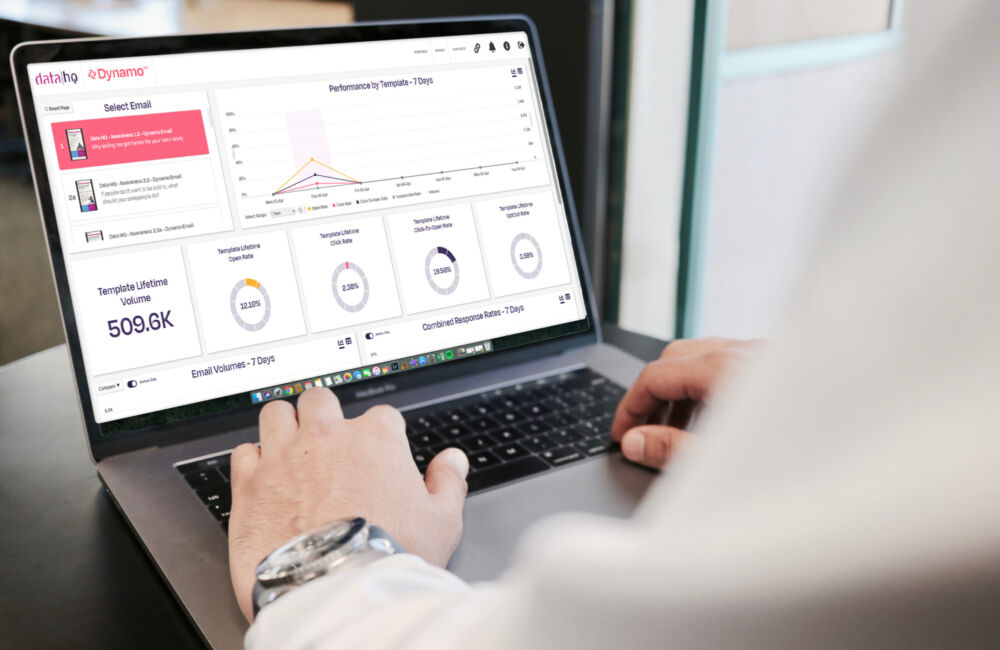
Access to high-quality B2B email data is only the starting point. The real impact comes from how effectively that data is used to identify the right prospects and engage them in a meaningful way. The Dynamo platform is a lead acceleration tool like no other.
Dynamo is designed to do this for you. Rather than relying on traditional firmographic targeting alone, the platform uses advanced modelling to identify prospects based on their likelihood to engage. This allows organisations to focus their outreach on the contacts most likely to respond.
Each prospect is then nurtured as an individual, with tailored communication journeys that consider both content and timing. This ensures that outreach is more relevant, more timely and better aligned with the needs of each audience.
By combining intelligent prospect selection with personalised engagement, Dynamo helps organisations move beyond broad cold outreach and towards more effective, data-driven campaigns. The result is typically a significant improvement in performance, with many organisations seeing two to three times higher engagement and conversion rates.
How to Choose a B2B Data Provider
Selecting the right data provider is an important step when planning marketing campaigns that rely on business contact data.
When evaluating providers, organisations often consider several factors. By considering these factors, businesses can select a provider that supports their marketing strategy and campaign objectives.
A comprehensive dataset ensures that businesses have access to information across a wide range of industries, company types and geographic regions. This breadth of coverage is important because it allows organisations to identify relevant prospects regardless of how specific or niche their targeting requirements may be.
Strong data coverage also supports long-term marketing activity. As targeting strategies evolve or campaigns expand into new markets, having access to an extensive dataset allows organisations to refine and adapt their approach without being constrained by limited data availability.
The ability to filter and segment data using detailed criteria is one of the most valuable aspects of professional marketing databases. Rather than working with a fixed list of contacts, organisations can build prospect lists that are tailored to the specific objectives of each campaign.
Targeting flexibility allows businesses to combine multiple criteria, such as industry, company size, location and job role, to create highly focused audience segments. This ensures that marketing activity is aligned with the characteristics of the organisations most likely to be interested in a particular product or service.
As marketing strategies become more sophisticated, the need for precise targeting increases. Flexible data enables organisations to test different audience segments, refine their approach over time and continuously improve campaign performance.
The accuracy of business data plays a critical role in the success of marketing and sales activity. Outdated or incorrect information can lead to poor engagement, wasted effort and reduced campaign effectiveness.
Reliable data providers invest in processes designed to maintain the quality and integrity of their datasets. This typically includes regular updates, validation checks and the ongoing enrichment of company and contact information. Maintaining accurate data helps ensure that marketing communications reach relevant organisations and that sales teams are working with dependable information. It also supports better segmentation, allowing businesses to build more precise and effective prospect lists.
For organisations relying on data-driven marketing, the quality of the underlying dataset is a key factor in achieving consistent results.
Access to high-quality data is important, but understanding how to use that data effectively is equally valuable. Working with a provider that has experience in supporting marketing and sales activity can help organisations make better use of their data and achieve stronger results.
An experienced data partner can provide guidance on targeting strategies, helping businesses define their ideal customer profile and identify the most relevant audience segments. This can be particularly useful when planning new campaigns or entering unfamiliar markets.
In addition, ongoing support ensures that organisations can refine their approach over time. As campaigns develop and objectives evolve, having access to knowledgeable support can help businesses adapt their targeting and make more informed decisions.
Why Choose Data HQ
Data HQ works with organisations across a wide range of industries to support marketing, sales and business development activities.
Our approach focuses on providing reliable business intelligence combined with practical expertise in marketing data.
Request a Data Count
If you are planning a marketing campaign and would like to understand how many organisations match your targeting criteria, our team can help.
Simply provide details about your campaign requirements, including:
• industries you wish to target
• geographic locations
• company size criteria
• job roles or departments

Request a Data Count
Contact UsFAQs
Is buying B2B email lists legal in the UK?
B2B marketing data can be used responsibly when organisations follow relevant regulations such as GDPR and PECR. Businesses should ensure that marketing communications comply with applicable rules and provide clear information about how contact data is used.
How accurate are business email lists?
The accuracy of marketing data depends on how frequently records are reviewed and updated. Professional data providers invest in validation processes and database maintenance to help ensure information remains current and reliable.
What industries can be targeted using B2B email lists?
Business databases often include companies across a wide range of sectors including construction, manufacturing, retail, healthcare, finance and technology. This allows organisations to focus campaigns on industries that are most relevant to their products or services.
Can I target specific job roles within companies?
Yes. Many marketing databases include job title information that allows organisations to target professionals such as directors, managers or departmental leaders within businesses.
How many businesses are included in UK marketing databases?
Large business databases may include information on millions of companies operating across the UK, allowing organisations to build prospect lists that match specific targeting criteria.